How to Whiten Teeth Safely: Options Compared
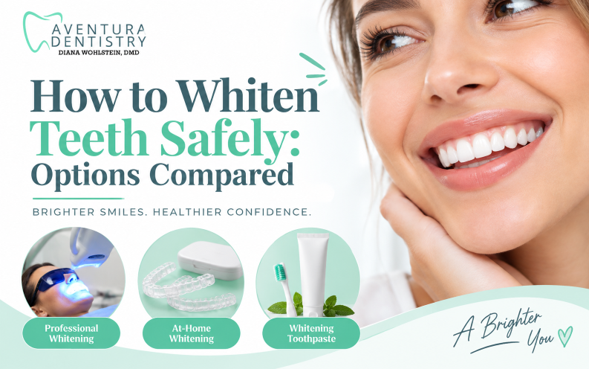
A brighter smile can make a real difference in how confident you feel, but with so many whitening products and treatments on the market, it's easy to end up more confused than informed. Coffee, tea, wine, smoking, and simple aging all contribute to staining over time, and while whitening can safely reverse a lot of that discoloration, the "safely" part depends heavily on which method you choose and how carefully you use it.
How Does Teeth Whitening Actually Work?
Most whitening treatments rely on one of two bleaching agents: hydrogen peroxide or carbamide peroxide. These compounds break stain molecules down into smaller pieces, which makes the color less concentrated and the tooth appear brighter. The higher the concentration of the bleaching agent and the longer it's in contact with your teeth, the more dramatic, and potentially risky, the results can be.
It's worth knowing upfront that whitening doesn't work on every type of discoloration. Yellow staining from food, drink, and aging typically responds well. Brown staining may respond less predictably, and gray tones caused by medication use or trauma to a tooth often don't bleach at all. Whitening also has no effect on crowns, veneers, fillings, or caps, it only works on natural tooth enamel.
In-Office Professional Whitening
In-office whitening is the fastest and most powerful option available. A professional-grade whitening gel is applied to the teeth and often activated with a specialized light, brightening teeth several shades in a single appointment that typically takes 60 to 90 minutes. Because it's performed under professional supervision, your gums are protected with a barrier gel or shield before the whitening agent is applied, which significantly reduces the risk of irritation.
A typical appointment starts with a brief consultation and a pre-treatment cleaning to remove any surface plaque that could interfere with even whitening. The whitening agent is then applied, sometimes in multiple rounds, with your dentist checking progress against your starting shade before deciding whether another application is worthwhile. Before you leave, you'll typically get guidance on foods and drinks to avoid for a day or two while the enamel is most porous and susceptible to new staining.
This option is well suited to patients who want visible results quickly, such as before a wedding or other event, and it offers the most consistent, predictable outcome of any whitening method. It's also a good fit if you've tried at-home products before with limited results and want a professional's tools and expertise from the start. If you're also considering other cosmetic dentistry treatments, whitening is often one of the simplest ways to start seeing a visible difference in your smile.
Custom At-Home Whitening Kits From Your Dentist
For patients who prefer a more gradual approach, a dentist can provide custom-fitted whitening trays along with professional-strength gel to use at home. Because the trays are made from an impression of your own teeth, the whitening gel stays in even contact with your enamel rather than pooling unevenly the way a generic, one-size-fits-all tray might.
This method typically takes anywhere from a few days to a few weeks to reach full results, but it allows you to control the pace and gives your dentist a chance to monitor for sensitivity along the way. It's often a good middle ground between the speed of in-office treatment and the affordability of over-the-counter products.
Over-the-Counter Whitening Products
Whitening strips, pens, gels, and toothpastes are widely available and the most affordable option, but they use lower concentrations of bleaching agent than professional treatments and aren't customized to your teeth. This can mean less dramatic results, and in some cases, uneven whitening if the product doesn't make full contact with every tooth surface.
If you choose to go this route, look specifically for products carrying the ADA Seal of Acceptance, which means they've been independently tested for both safety and effectiveness. Whitening toothpastes, in particular, only remove surface stains through mild abrasives, they don't change the underlying color of your teeth the way a true bleaching agent does, so expectations should be set accordingly.
The Risks of Over-Bleaching
More whitening is not always better, and overdoing it, sometimes referred to informally as "whitening addiction", carries real risks. Overuse of bleaching products or treatments can lead to several problems:
Tooth sensitivity to hot and cold is one of the most common side effects, caused when the peroxide penetrates the enamel and irritates the nerve inside the tooth. Gum irritation and inflammation can also occur if whitening gel makes contact with soft tissue, particularly with over-the-counter products that aren't custom-fitted.
More seriously, repeated over-bleaching can erode enamel, leaving teeth more vulnerable to decay and long-term sensitivity, and can even cause uneven coloring if some areas are exposed to more whitening agent than others.
The safest approach is to talk with a dental professional before starting any whitening treatment, follow the recommended frequency and duration exactly, and stop immediately if you notice unusual pain, white spots, or persistent sensitivity.
Managing Sensitivity After Whitening
Some temporary sensitivity is common after whitening, even when done correctly, and it typically resolves within a few days. Using a desensitizing toothpaste in the days following treatment can help, along with avoiding very hot or cold foods and drinks temporarily and limiting acidic items like citrus and soda, which can further irritate already-sensitive enamel.
Brushing gently with a soft-bristled toothbrush and spacing out any additional whitening sessions, rather than repeating treatments back to back, also reduces the likelihood of lingering discomfort. If sensitivity persists beyond a week or becomes severe, it's worth checking in with your dentist rather than continuing to push through it.
Who Should Avoid Teeth Whitening?
Teeth whitening is generally not recommended for children under 16, since their teeth and gums are still developing and the pulp chamber is larger, making sensitivity more likely. Pregnant or nursing individuals are often advised to wait as a precaution, even though there's no strong evidence of harm, simply because whitening isn't essential and most dentists prefer to avoid unnecessary treatments during this time.
Patients with existing gum disease, exposed tooth roots, or significant enamel wear should also have a dental exam before whitening, since these conditions can make teeth more prone to sensitivity or irritation from bleaching agents.
How to Choose the Right Option for You
If you want the fastest, most dramatic results and don't mind the higher cost, in-office whitening is typically the best choice. If you'd rather ease into whitening gradually and want a more affordable option than in-office treatment while still getting a custom fit, at-home kits from your dentist are a strong middle ground.
Over-the-counter products make sense for minor touch-ups or maintaining results between professional treatments, but they shouldn't be relied on as a substitute for a dental consultation if your discoloration is significant.
Cost and lifestyle both factor into the decision too. In-office whitening is the more expensive option upfront but delivers results in a single visit, which suits patients on a tight timeline. At-home trays spread the cost differently and let you whiten on your own schedule, which some patients find more convenient even if it takes longer to see the final result.
Whatever method you choose, a consultation with your dentist first helps set realistic expectations, rules out discoloration that whitening won't fix, and ensures the method you pick is appropriate for your specific teeth and gum health. It's also worth asking about maintaining results afterward, touch-up treatments every six months to a year, alongside routine dental cleanings, help keep new staining from building back up.
Conclusion
Teeth whitening can safely and effectively brighten your smile, but the safest results come from professional guidance rather than guesswork. Understanding the difference between in-office treatment, custom at-home kits, and over-the-counter products, along with respecting the risks of overuse, helps you choose an approach that gets you a brighter smile without unnecessary sensitivity or damage. For more information on how whitening works, the American Dental Association's MouthHealthy teeth whitening resource is a helpful reference. To schedule a whitening consultation in Aventura, contact our office today.
Frequently Asked Questions
How many shades lighter can I expect after professional teeth whitening?
Results vary by patient, but most people can expect their teeth to become two to eight shades lighter.
How long does professional teeth whitening take?
An in-office treatment typically takes around 60 to 90 minutes to complete.
Can children whiten their teeth?
Teeth whitening is generally not recommended for children under 16, as their teeth and gums are still developing.
Is teeth whitening safe?
Yes, when performed under the supervision of a dental professional. Overuse or misuse of whitening products can lead to sensitivity, gum irritation, or enamel damage.
Why do my teeth feel sensitive after whitening?
Sensitivity happens when the bleaching agent penetrates the enamel and reaches the nerve of the tooth. It's usually temporary and resolves within a few days.
About the Author
This article was reviewed by Dr. Diana Wohlstein, DMD, of Aventura Dentistry. Dr. Wohlstein earned her dental degree from the Universidad Central de Venezuela in 1987, completed a postgraduate degree in Prosthodontics in 1990, and later completed a Fellowship in Dental Implants and an additional dental degree at Tufts University School of Dental Medicine in Boston in 1996. Aventura Dentistry is located at 2925 Aventura Blvd (NE 199th St.), Suite 203, Aventura, FL 33180, and provides general, cosmetic, and implant dentistry to patients throughout Aventura, Florida.
Disclaimer
This article is intended for general informational purposes only and does not constitute dental or medical advice. It is not a substitute for professional evaluation, diagnosis, or treatment by a licensed dentist. Always consult a qualified dental professional before starting any whitening treatment.
Blog Post Author

Contributed by DentalROI
DentalROI provides relevant dental content to help providers educate patients. The statements, services, and products referenced in this article have not been evaluated by the Food and Drug Administration, and they are not intended as a substitute for professional medical advice, diagnosis, or treatment. Always seek the advice of your dental provider with any questions or issues you may have. Specific recommendations may vary in different circumstances, so individual consultation is important.


