Dental Implants in Aventura: The Full Process Explained
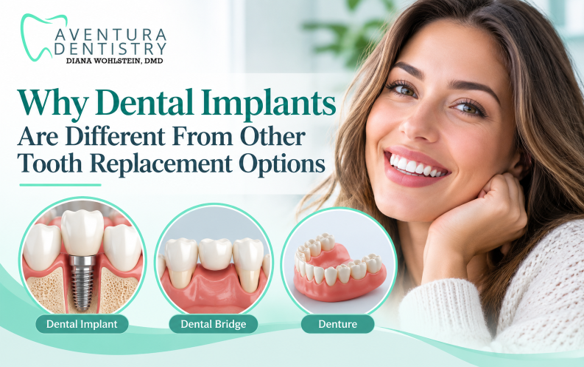
Why Dental Implants Are Different From Other Tooth Replacement Options
Missing a tooth affects more than just your smile, it can change how you chew, how you speak, and even how your jawbone holds up over time. Dental implants have become the gold standard for replacing missing teeth because they replace both the visible crown and the root underneath it. If you're considering implants, understanding the process from consultation to final restoration can make the decision, and the treatment itself, much less intimidating.
Unlike a bridge, which relies on neighboring teeth for support, or a denture, which rests on the gums, a dental implant is anchored directly into the jawbone. It consists of a small titanium post that acts as an artificial tooth root, topped with a custom crown, bridge, or denture once healing is complete. Because the implant is secured into bone rather than relying on surrounding teeth or suction, it functions and feels much closer to a natural tooth.
This structural difference also protects your long-term oral health. Implants stimulate the jawbone the same way a natural tooth root does, which helps prevent the bone loss and facial collapse that often follow tooth loss. Bridges and dentures, by contrast, don't provide that stimulation, and the jawbone beneath them can gradually shrink over time.
Step One: Consultation and Evaluation
The process begins with a comprehensive evaluation to determine whether you're a good candidate for implants. Your dentist will review your medical history, examine your gums and remaining teeth, and typically take x-rays or 3D imaging to assess the quality and quantity of bone in the area where the implant will be placed.
Good candidates generally have healthy gums, sufficient jawbone density, and overall good health. Conditions like uncontrolled diabetes, advanced gum disease, or heavy tobacco use can affect healing and candidacy, but that doesn't necessarily rule implants out, additional preparatory treatments, like a gum disease treatment plan or bone grafting, may still make implants possible.
Step Two: Implant Placement Surgery
Once you're cleared for treatment, the next step is the surgical placement of the titanium implant post into the jawbone. This is performed under local anesthesia, and most patients report only mild discomfort during recovery, manageable with over-the-counter or prescribed pain relief. Your dentist may recommend a diet of soft, cold foods for the first few days while the surgical site begins to heal.
If you're missing several teeth in a row or need a full arch replaced, the placement plan may involve multiple implants working together to support a larger restoration, such as an implant-supported bridge or full denture. For patients missing most or all of their teeth in an arch, full-arch implant solutions use a handful of strategically placed implants to anchor an entire set of replacement teeth, avoiding the need for one implant per missing tooth.
Before placement, some patients need preparatory procedures if there isn't enough healthy bone at the implant site, often the result of bone loss following a tooth extraction that happened years earlier. Bone grafting adds volume and density to the jaw so the implant has a stable foundation, and while it adds time to the overall process, it significantly improves long-term success rates for patients who need it.
Step Three: Osseointegration, The Healing Phase
After placement, the implant needs time to fuse with the surrounding jawbone in a process called osseointegration, which literally means "combines with the bone." This is what makes an implant so stable and long-lasting, the bone actually grows around the titanium post and locks it into place.
Osseointegration typically takes a few months, though the exact timeline varies by patient and by how much bone was available at the surgical site. In some cases, a temporary crown or denture is placed during this healing period so you're not without a functional, natural-looking tooth while the implant integrates. In select situations, same-day implant and restoration placement may be possible, though this depends on individual bone quality and treatment planning.
Step Four: Placing the Custom Restoration
Once osseointegration is complete and the implant is firmly anchored, it's time for the final restoration. For a single missing tooth, this typically means a custom porcelain crown designed to match the size, shape, and color of your surrounding teeth. If you're replacing multiple teeth, a custom bridge or an implant-supported denture will be fabricated to fit both your mouth and your implants precisely.
This final piece is what patients typically notice most, a natural-looking, secure replacement that doesn't shift, click, or require adhesives the way traditional dentures sometimes do.
What to Expect During Recovery
Recovery varies depending on how many implants were placed and whether any additional procedures, like bone grafting, were needed. Mild swelling, tenderness, and minor bleeding are normal in the first few days. Sticking to soft foods, avoiding smoking, and keeping the surgical site clean as directed all support faster, smoother healing.
Most patients return to normal activities within a few days, though full healing, the osseointegration process described above, takes longer and happens gradually in the background while you go about daily life relatively normally. It's normal to have a follow-up visit or two during this period so your dentist can confirm the implant is integrating properly before moving on to the final restoration.
Pain medication, if prescribed, is typically only needed for the first few days. Most patients find that any discomfort is milder than they expected going in, and manageable with the same over-the-counter pain relievers used for a headache or minor procedure.
Who Is a Good Candidate for Dental Implants?
Age alone isn't a limiting factor for implants, overall health matters more. Good candidates typically have healthy gums, enough remaining jawbone (or are eligible for bone grafting to build up bone before placement), and a commitment to good oral hygiene going forward. Smoking can slow healing and affect long-term success, but it doesn't automatically disqualify a patient; your dentist can walk through what additional planning might help.
A thorough consultation, including imaging and a review of your health history, is the only reliable way to know whether implants are the right choice for your specific situation.
How Long Do Dental Implants Last?
With proper care, daily brushing and flossing, regular dental checkups, and avoiding excessive force on the restoration, dental implants can last 20 years or longer, and many patients keep the same implant for life. The crown or restoration on top may eventually need replacement due to normal wear, but the titanium implant itself is designed to be a permanent, long-term fixture.
Comparing that longevity to other tooth replacement options helps put the investment in perspective. Bridges typically need replacement every 10 to 15 years, and traditional dentures often need relining or replacing every five to seven years as the jawbone continues to change shape. Implants, by preserving the bone and standing on their own, tend to hold up considerably longer with routine care.
What Does the Investment in Dental Implants Look Like?
Cost is often one of the first questions patients ask, and it's a fair one, implants typically represent a larger upfront investment than a bridge or denture. That said, the cost reflects the full process: the surgical placement, the healing period with any necessary imaging or follow-up visits, and the custom-fabricated final restoration.
When you factor in the 20-plus-year lifespan many implants achieve, the cost per year of use often compares favorably to replacing a denture every five to seven years or a bridge every decade or so.
Dental insurance coverage for implants varies significantly from plan to plan, some cover a portion of the surgical placement, the restoration, or both, while others treat implants as an elective procedure with limited coverage. Our team can help verify your specific benefits ahead of time, and financing options are often available to help spread the cost over time.
Conclusion
Dental implants take patience, the full process from consultation to final restoration can span several months, but the result is a permanent, natural-feeling replacement that protects your jawbone and restores confidence in your smile. If you're missing one or more teeth and want to understand whether implants are right for you, the American Dental Association's MouthHealthy implants resource is a helpful starting point. To schedule a consultation in Aventura, contact our office today.
Frequently Asked Questions
Are dental implants painful?
The procedure is performed under local anesthesia, and most patients report only minimal discomfort during recovery.
How long do dental implants last?
With proper care, dental implants can last 20 years or longer, and many last a lifetime.
Can smokers get dental implants?
Smoking can affect healing, but implants may still be possible with proper planning and care.
Is there an age limit for dental implants?
No. As long as you're in good health and jaw growth is complete, age is not a limiting factor.
Can dental implants be done in one day?
In select cases, same-day implant placement and restoration may be possible, depending on bone quality and treatment planning.
Does insurance cover dental implants?
Coverage varies by plan. Our team can help verify your specific benefits before treatment begins.
About the Author
This article was reviewed by Dr. Diana Wohlstein, DMD, of Aventura Dentistry. Dr. Wohlstein earned her dental degree from the Universidad Central de Venezuela in 1987, completed a postgraduate degree in Prosthodontics in 1990, and later completed a Fellowship in Dental Implants and an additional dental degree at Tufts University School of Dental Medicine in Boston in 1996. Aventura Dentistry is located at 2925 Aventura Blvd (NE 199th St.), Suite 203, Aventura, FL 33180, and provides general, cosmetic, and implant dentistry to patients throughout Aventura, Florida.
Disclaimer
This article is intended for general informational purposes only and does not constitute dental or medical advice. It is not a substitute for professional evaluation, diagnosis, or treatment by a licensed dentist. Always consult a qualified dental professional regarding your specific dental needs or before starting any treatment.
Blog Post Author

Contributed by DentalROI
DentalROI provides relevant dental content to help providers educate patients. The statements, services, and products referenced in this article have not been evaluated by the Food and Drug Administration, and they are not intended as a substitute for professional medical advice, diagnosis, or treatment. Always seek the advice of your dental provider with any questions or issues you may have. Specific recommendations may vary in different circumstances, so individual consultation is important.


